Running a Local LLM
on an Old Phone
Turning retired hardware into a high-performance AI edge server with local inference, automated reporting, and real-time monitoring, for free.
The Hidden Power in Your Drawer
Most old smartphones represent a missed opportunity. Despite their cracked screens or dated cameras, they remain incredible pieces of engineering: ARM64 architectures, highly efficient cores, built-in battery redundancy, and integrated wireless connectivity.
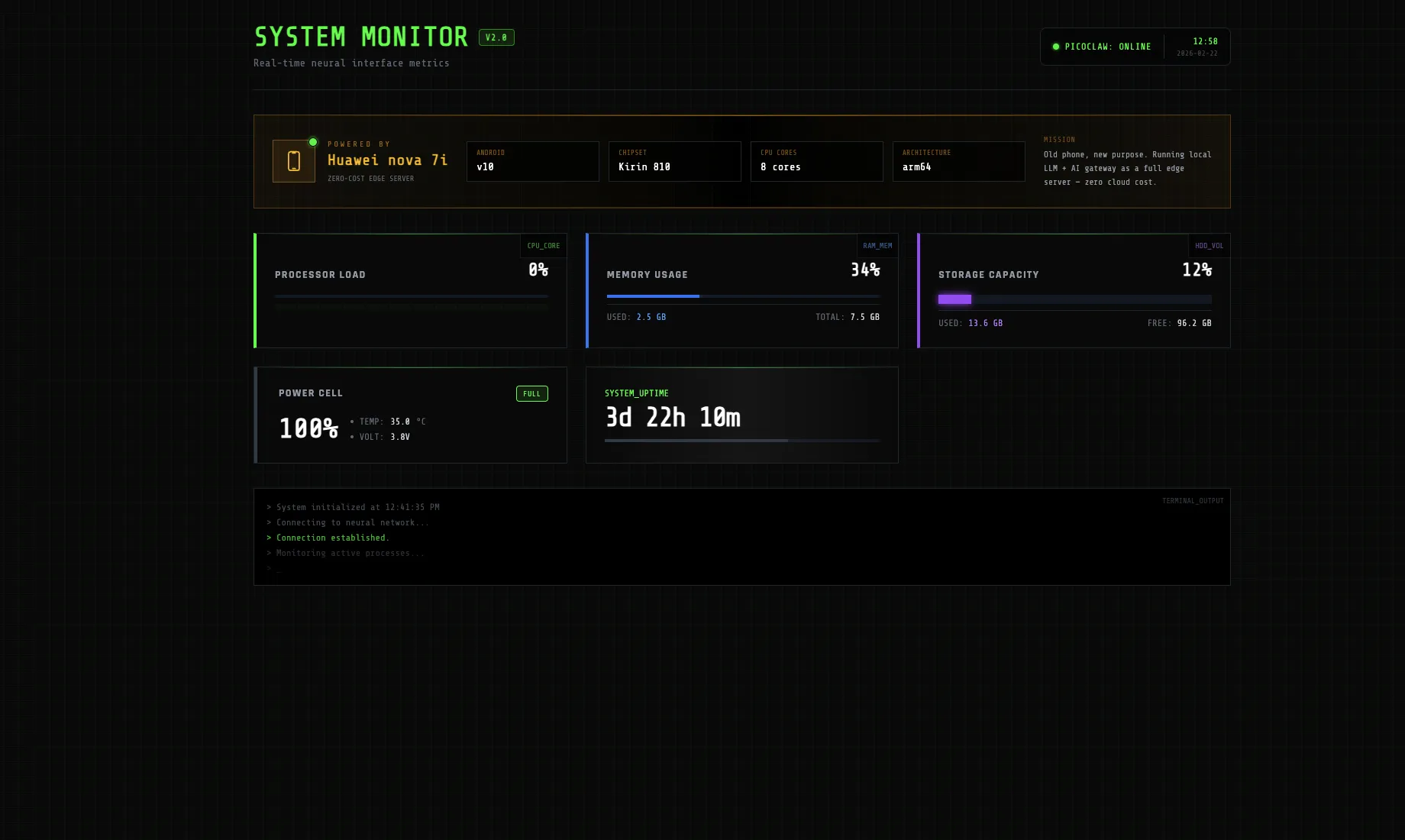
My Huawei nova 7i was collecting dust. By repurposing it as an always-on AI server, I managed to eliminate cloud dependency for basic inference tasks while breathing new life into "e-waste." No cloud bills, no privacy concerns, just a pure local ecosystem.
Zero Latency/Cost
No API fees or network delays from external providers.
Total Privacy
Your data stays on-device, encrypted and local.
Sustainable Dev
Repurposing hardware reduces environmental impact.
Full Linux Stack
Native Linux performance via Termux & ARM64.
Architecture Flow
A multi-layered pipeline running entirely on the Kirin 810 SoC.
Technical Implementation
The Linux Foundation
Deploying a Linux ecosystem on Android begins with Termux. I opted for the F-Droid distribution to ensure full access to the package repository. Integrating Termux:API was critical. It enables low-level hardware access, allowing my scripts to monitor thermal throttling and power states in real-time.
pkg update && pkg upgrade
pkg install termux-api nodejs git cmakeInference Engine: llama.cpp
The choice of inference engine is vital. llama.cpp provides native C++ performance on ARM64. I compiled it with 4-core parallelization optimized for the Kirin 810 architecture. For the model, Qwen 2.5 (1.5B) at Q4_K_M quantization offers the best balance between token-per-second (TPS) and contextual intelligence.
git clone https://github.com/ggml-org/llama.cpp
cd llama.cpp && cmake -B build
cmake --build build --config Release -j4System Orchestration
Automation is handled via standard Linux cron jobs. The Node.js worker triggers PicoClaw at scheduled intervals, processes the model output, and pushes rich Markdown reports to my Telegram bot. This allows for scheduled news aggregation and personal task management without manual intervention.
0 */6 * * * node ~/scripts/generate-intel-report.js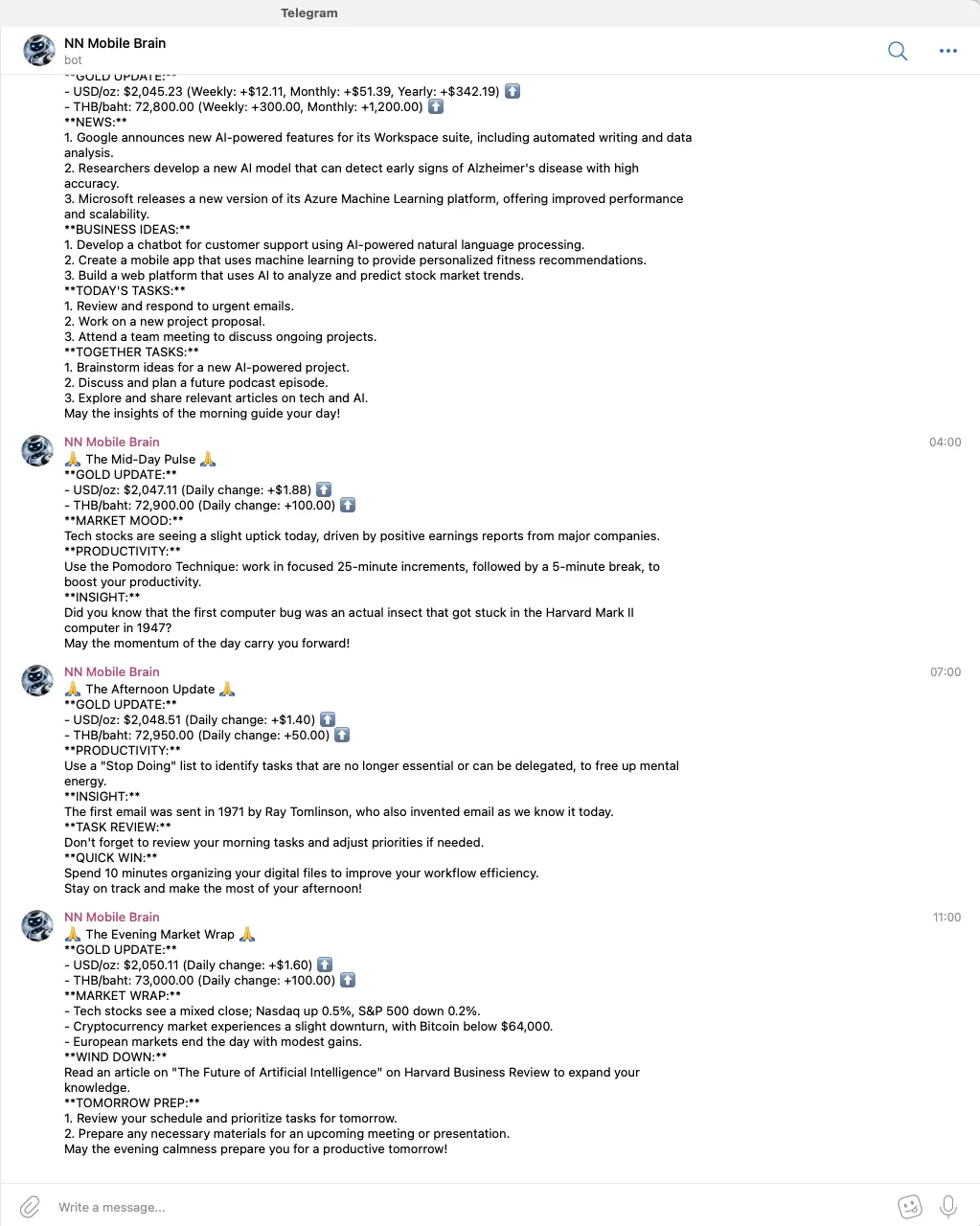
The Future of Edge AI
Running local LLMs on repurposed mobile hardware is a fun experiment, but it also shows where distributed computing is heading. As models become more efficient and NPU (Neural Processing Unit) access becomes more standardized in Linux-on-Android environments, the "phone in your drawer" might just become the most valuable server in your stack.
Zero cloud cost, zero data leakage, and zero recurring fees. The intelligence is now local.